




Realtor email signature examples, compliance requirements, and best practices
26 February 2026
0 min read
TL;DR
A realtor email signature should include your full name, title, brokerage, license number (where required), and clear contact details.
Compliance matters. Many states require license disclosure and proper brokerage attribution in marketing communications, including email.
Keep it structured. Clean design, mobile-friendly formatting, and consistent branding reinforce professionalism.
Use your signature strategically. Promote listings, collect reviews, or add a booking link, but focus on one primary action.
Avoid manual updates. Inconsistent signatures can lead to branding issues and compliance gaps across teams.
Centralized management helps brokerages maintain compliant, consistent real estate agent email signatures across every user and device.
A realtor email signature is the professional block of information automatically added to the end of your emails. It typically includes your name, title, brokerage, license details, contact information, and legally required disclaimers. For real estate agents, it’s both a branding tool and a compliance necessity.
Every email you send to buyers, sellers, attorneys, lenders, or partners carries your reputation with it. An inconsistent or incomplete signature can create confusion. A structured, compliant email signature reinforces credibility.
A high-performing real estate agent email signature should:
Display your full name and professional title
Include your brokerage name and required license number
Add legally required disclosures or Fair Housing language
Provide clear contact details and website links
Present a professional headshot or brand elements
Offer optional marketing elements like active listings or booking links
When designed correctly, your signature does three things at once: it verifies your credentials, strengthens brand consistency, and supports lead generation through everyday communication.
In the sections below, you’ll see realtor email signature examples, compliance guidance, and practical design tips you can apply immediately.
What should you include in a realtor email signature?
A realtor email signature should clearly identify you, your brokerage, and your licensing status while meeting any state or MLS disclosure requirements. It should also make it simple for recipients to contact you or view your listings.

Required elements
While requirements vary by state and brokerage, most real estate professionals should include:
Full legal name
Professional title such as Realtor®, Real Estate Agent, Associate Broker, or Broker
Brokerage name exactly as licensed
State license number, where disclosure is required
Direct phone number
Email address
Website or brokerage URL
If you use the term Realtor®, confirm that you are an active member of the National Association of Realtors and follow trademark usage guidelines.
Some states also require:
Supervising broker identification
Office address
Jurisdiction-specific legal language
Always confirm requirements with your brokerage or state regulatory body.
Recommended professional elements
To strengthen credibility and engagement, many real estate agents also include:
A professional headshot
Brokerage logo
Equal Housing Opportunity logo
- Social media profile links
Link to active listings
“Schedule a showing” or calendar booking link
Awards or certifications
Short compliance disclaimer
Realtor email signature examples
Below are structured examples based on the designs provided. Each demonstrates a different strategic objective: branding, lead generation, reviews, compliance, or simplicity.
1. The listing-driven realtor email signature

This format combines strong personal branding with promotional property banners.
Why it works
- Large, professional headshot builds trust
- Brokerage logo reinforces brand identity
- Clear contact hierarchy (call, email, office address)
- Social icons for multi-channel visibility
- Clickable listing banners with “Learn more” CTAs
This style is ideal for agents who actively promote:
- New listings
- Property categories (luxury, urban, waterfront)
- Free valuation services
Best for
- High-volume listing agents
- Boutique agencies
- Teams running ongoing property campaigns
2. The review-focused real estate agent email signature

This version prioritizes social proof.
Key elements
- Professional headshot
- Direct contact details
- Simple vertical layout
- Prominent review request banner
- Star rating visual cue
- “Leave us a review” CTA
Why it works
Real estate decisions rely heavily on trust. By asking for reviews directly inside email conversations, agents increase the likelihood of collecting testimonials after successful transactions.
Best for
- Agents focused on reputation building
- New agents building credibility
- Brokerages prioritizing online review growth
3. The compliance-forward brokerage signature

This format prioritizes licensing, awards, and disclaimers.
Key elements
- Agent name and brokerage affiliation
- Award badge or certification seal
- License number and contact details
- Legal disclaimer text block
- Registered office information
Why it works
Some jurisdictions require specific disclosures. This format keeps everything clearly structured without overwhelming the design.
It’s especially useful for:
- Multi-state brokerages
- Commercial real estate professionals
- Firms operating under strict regulatory environments
4. The minimal professional realtor signature

This is a clean, stripped-back format focused on clarity.
Key elements
- Name and role
- Brokerage name
- Direct contact number
- Small social icons
Why it works
Minimal designs load faster, appear clean on mobile devices, and avoid clutter. They’re ideal when compliance requirements are minimal or handled centrally.
Best for
- Independent realtors
- Team agents under a unified brokerage system
- Professionals prioritizing clarity over promotion
Design best practices across all examples
Regardless of format, high-performing realtor email signatures share these traits:
Clear visual hierarchy
- Consistent brand colors
Professional headshot (optional but recommended)
Clickable links, not plain text URLs
Mobile responsiveness
Structured compliance placement
Avoid:
Overcrowding with too many banners
- Low-resolution logos
Manual formatting across different devices
Inconsistent license disclosures
Real estate email signature compliance requirements
Real estate professionals operate in a regulated environment. A realtor email signature must accurately reflect your licensing status, brokerage affiliation, and any legally required disclosures. Failing to include mandatory information can create confusion, trigger complaints, or expose your brokerage to avoidable risk.
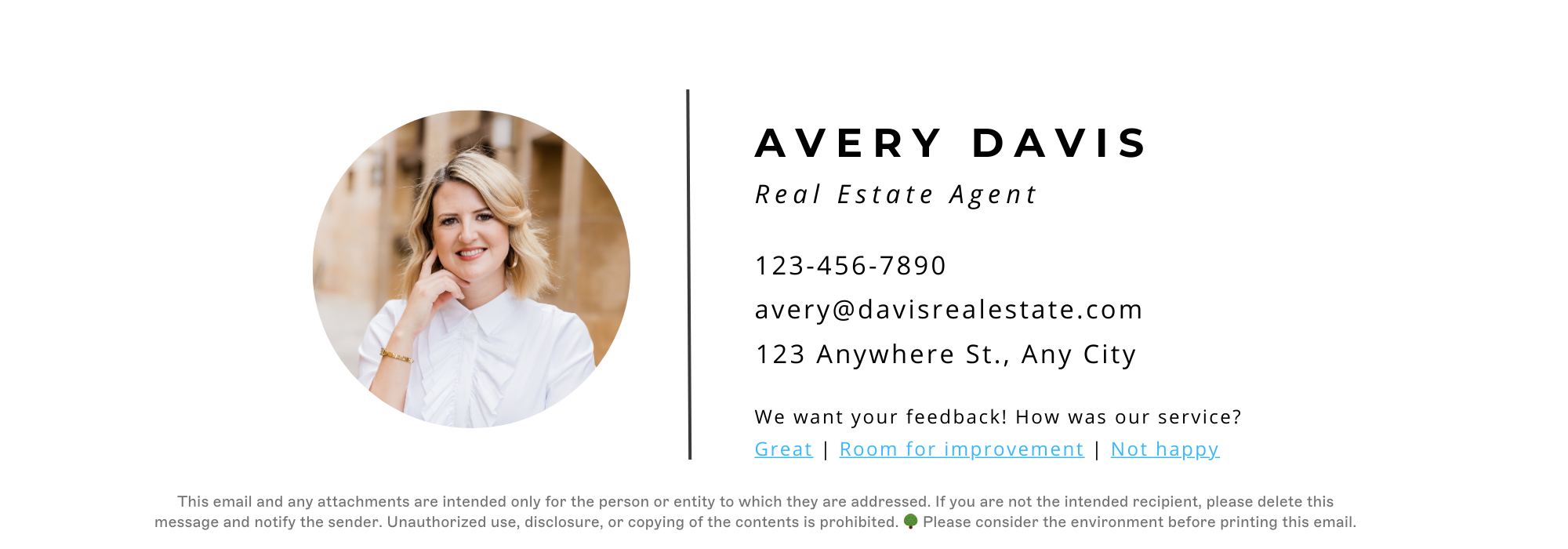
Below are the key compliance areas to consider.
1. License disclosure requirements
Many U.S. states require real estate agents and brokers to display their license number in marketing communications. Email can fall under that definition, especially when promoting listings or services.
Depending on jurisdiction, you may need to include:
State license number
Full licensed name
Brokerage name as registered
Supervising broker information
Requirements vary. Always confirm with:
Your state real estate commission
Your brokerage compliance officer
Local MLS guidelines
If you operate in multiple states, your real estate agent email signature may need dynamic disclosures based on territory.
2. Brokerage attribution
Independent agents must still represent their brokerage clearly.
Your signature should reflect:
Brokerage name exactly as licensed
Office location (if required)
- Proper brand hierarchy
For team agents, confirm whether:
The team name can appear larger than the brokerage
The brokerage logo must be more prominent
The supervising broker must be listed
Brokerage attribution is one of the most common compliance oversights in email communication.
3. Realtor® trademark usage
The term Realtor® is a registered trademark of the National Association of Realtors (NAR).
If you use “Realtor®” in your email signature:
You must be an active NAR member
The ® symbol should be used correctly
It should not replace your legal title (e.g., Licensed Real Estate Agent)
Improper trademark usage can result in compliance notices from NAR.
4. Fair Housing and Equal Opportunity language
Many brokerages include:
Equal Housing Opportunity logo
Fair Housing disclaimer language
While not always mandatory in email, consistent inclusion strengthens compliance posture and reinforces professionalism.
5. Legal disclaimers
Email disclaimers may address:
Confidentiality
Liability limitations
Financial representation language
Jurisdictional regulatory statements
These are especially important for:
Commercial real estate
Property investment services
International transactions
Multi-state brokerages
The key is consistency. Disclaimers shouldn't rely on individual agents manually copying and pasting text. Inconsistent formatting or outdated language can create risk exposure.
6. Why centralized control matters
In small brokerages, manual signature setup may seem manageable. At scale, it becomes inconsistent quickly.
Common issues include:
Agents forgetting to update license numbers
Outdated brokerage logos
Missing disclosures on mobile emails
Formatting differences across devices
A structured email signature management system ensures:
Disclosures are applied consistently
Branding remains uniform
Agents cannot accidentally remove required text
Updates deploy instantly across all users
For brokerages operating across multiple offices or states, this becomes critical.
Compliance summary checklist
Before finalizing your realtor email signature, confirm:
License number is correct and formatted properly
Brokerage name matches official registration
Required disclosures are included
Trademark usage is compliant
Mobile and desktop versions display consistently
All agents use the same approved template
How real estate agents can generate leads from their email signature
A realtor email signature appears in every message you send. That makes it a consistent touchpoint across buyer, seller, lender, and partner conversations.
 Unlike promotional campaigns, one-to-one emails are opened and read. A structured real estate agent email signature allows you to use that space deliberately.
Used strategically, it can support lead generation without changing how you work.
Promote active listings
If you’re marketing property, your signature can quietly reinforce it.
Use an email banner or featured image to highlight:
A new listing
A recently sold property
A niche category such as luxury or waterfront
An investment opportunity
Keep it focused. One clear call to action performs better than multiple competing links.
Link to a dedicated page, not your homepage. Make it easy for recipients to act without searching.
Add a property valuation call to action
Seller leads often begin with a simple question about pricing.
Use a concise link such as:
Request a home valuation
Book a pricing consultation
Get a market analysis
Placed inside your realtor email signature, this CTA appears naturally during follow-ups and negotiations, where seller intent is often strongest.
Collect reviews at the right moment
After a transaction closes, timing matters. A short review or survey prompt in your signature turns routine emails into reputation-building opportunities.
Because it appears inside trusted conversations, response rates are often stronger than standalone review requests. Over time, this strengthens local visibility and referral confidence.
Include a scheduling link
Back-and-forth scheduling slows momentum. Adding a simple booking link reduces friction.
It shortens the path from conversation to appointment and keeps deals moving.
Reinforce credibility with certifications
Subtle authority signals matter in competitive markets.
Consider including:
- Professional certifications
Industry awards
Years of experience
Specialist designations
These don’t need to dominate the design. A small, structured placement is enough to reinforce credibility.
Rotate campaigns without increasing email volume
Your real estate agent email signature can adapt throughout the year.
For example:
Open house announcements
First-time buyer guides
Investor briefings
Seasonal market updates
This keeps messaging current while maintaining brand consistency.
Manage realtor email signatures with centralized control
Managing realtor email signatures manually often leads to inconsistent branding, outdated license information, and missing disclosures. As teams grow, those risks increase.
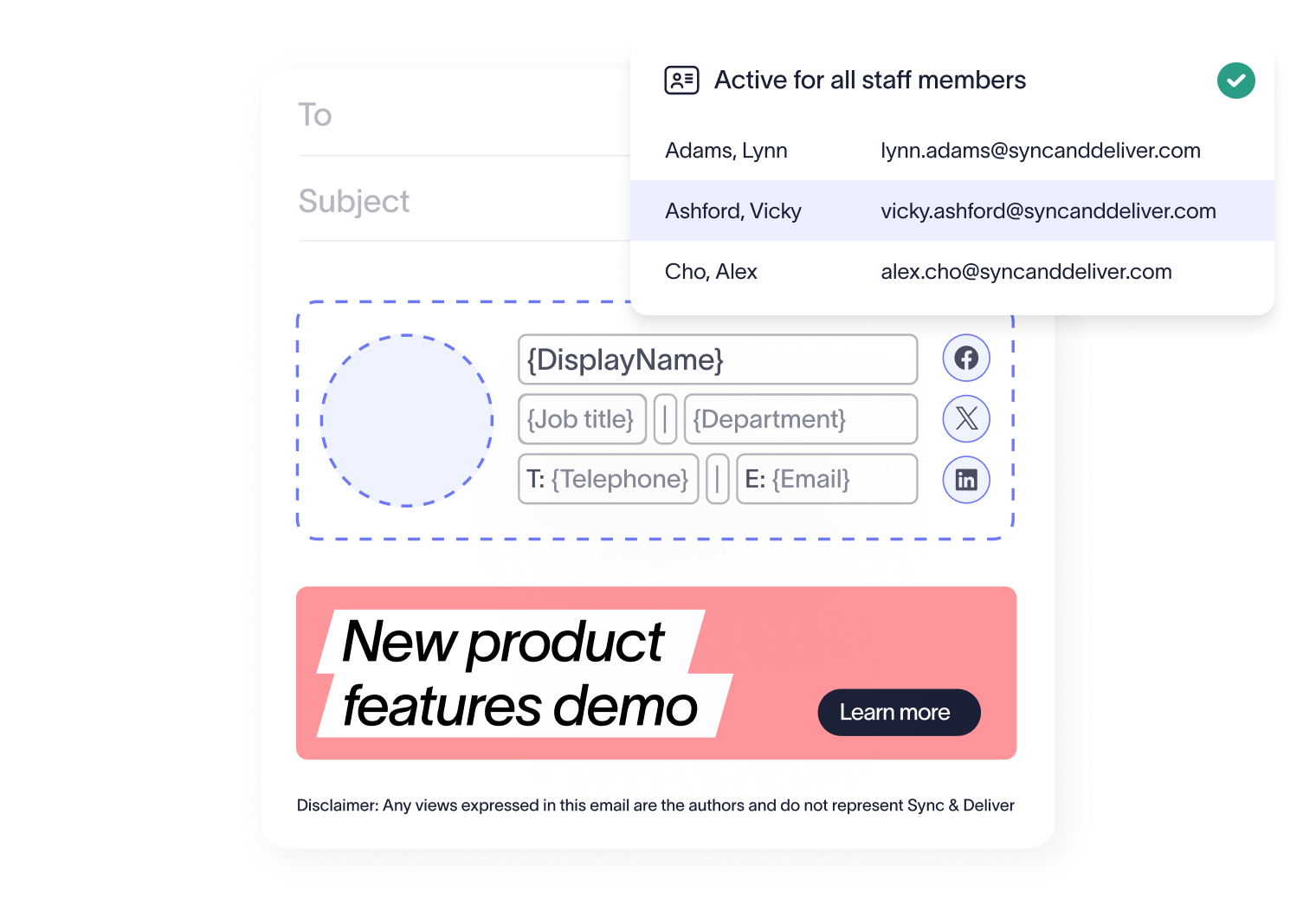
Exclaimer gives brokerages and real estate teams centralized control over every real estate agent email signature across desktop, web, and mobile. You can apply compliant templates, update branding instantly, rotate listing promotions, and maintain visibility over changes without relying on individual agents to edit their own signatures.
This allows you to maintain professionalism, reduce administrative workload, and keep compliance consistent at scale.
Start your free trial or book a demo today.